

Manhattan Family Court is officially known as New York County Family Court. It is located at 60 Lafayette Street in Lower Manhattan.
The court hears cases involving custody, visitation, child support, paternity, family offenses, guardianship, child abuse and neglect, juvenile delinquency, adoption and foster care. It does not grant divorces. Divorce cases are filed in New York State Supreme Court.
Paul W. Matthews, Esq., is an experienced and affordable Manhattan Family Court lawyer. He represents parents and other family members in custody, visitation, child support, family-offense and related proceedings.
Mr. Matthews began his legal career trying cases in Manhattan Family Court as an Assistant Corporation Counsel. He has since handled nearly 1,000 Family Court matters, including hundreds of trials and numerous appeals.
His hourly rate is $300. Free telephone consultations are available.
Manhattan meeting location: 90 Broad Street, 3rd Floor, by appointment
Telephone: (347) 461-0760
Manhattan Family Court – Unique History and Today
Official name: New York County Family Court
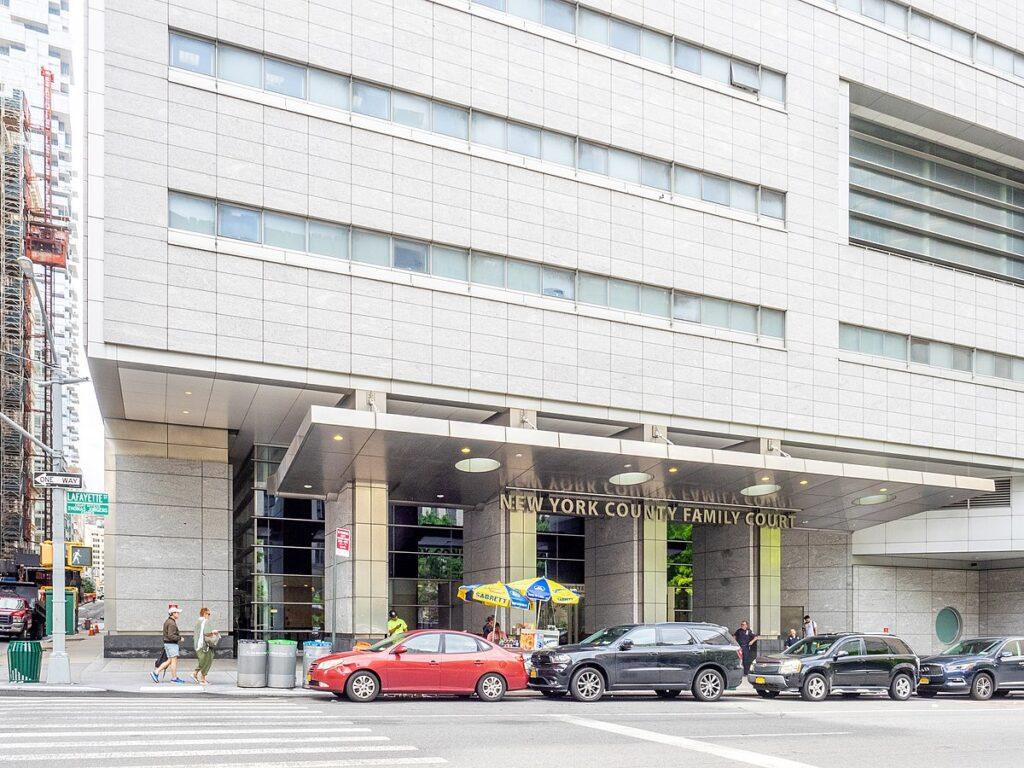
Court address: 60 Lafayette Street, New York, NY 10013
Need a Lawyer for a Manhattan Family Court Case?
Family Court cases involve important personal relationships. They can affect where a child lives, how often a parent sees a child, how much support must be paid and whether an order of protection will be issued.
These cases sometimes move quickly. Temporary orders may be entered before a full hearing. A statement made at the beginning of a case can affect what happens months later.
Paul W. Matthews represents clients in contested Manhattan Family Court proceedings. Clients work directly with him rather than being passed to a junior associate.
Call (347) 461-0760 for a free telephone consultation.
What Cases Does a Manhattan Family Court Lawyer Handle?
A Manhattan Family Court lawyer may handle several different types of proceedings.
Child Custody and Visitation
Custody cases determine who will make important decisions for a child and where the child will live.
Visitation cases determine when and how a parent or other eligible person may spend time with a child.
These cases may involve allegations of domestic violence, interference with parenting time, relocation, substance misuse, mental-health concerns or a child’s refusal to visit.
Custody and Visitation Modifications
A custody order may be modified when circumstances have changed and modification would serve the child’s best interests.
Modification cases often require careful attention to what has happened since the prior order. They may also involve evidence of earlier conduct when that evidence helps explain a current change or continuing risk.
Child Support
Child-support proceedings may concern the initial amount of support, enforcement of an existing order or modification based on changed circumstances.
Support cases may involve income records, employment benefits, childcare costs, health-insurance expenses, educational expenses and claims that a parent is earning less than he or she could earn.
Objections to Support Magistrate Orders
Many child-support matters are first heard by a Support Magistrate.
A party who believes the resulting order contains a legal or factual error may be able to file written objections. Strict filing and service deadlines apply.
Family Offenses and Orders of Protection
Family Court may issue orders of protection in qualifying family and intimate relationships.
These proceedings can involve allegations of harassment, threats, stalking, assault, criminal mischief and other misconduct. The court may issue a temporary order before a fact-finding hearing is completed.
Paternity
A paternity proceeding determines a child’s legal father.
The result may affect child support, custody, visitation, inheritance and other legal rights.
Guardianship and Grandparent Cases
Family Court also hears certain guardianship matters and applications involving grandparents or other relatives.
These cases may raise difficult questions about standing, extraordinary circumstances and the best interests of the child.
Enforcement and Violation Proceedings
A court order is not merely a recommendation.
A party who willfully violates a custody, visitation, support or protection order may face serious consequences. The available remedy depends on the type of order and the evidence presented.
Family Court Appeals
An appeal is not a new trial. It is a review of the record created in the lower court.
An appellate lawyer must identify preserved legal errors, understand the applicable standard of review and explain why the error affected the result.
Paul W. Matthews handles both Family Court trials and appeals.
Experience in Manhattan Family Court
Manhattan Family Court is not merely a courthouse that Paul W. Matthews visits occasionally.
He began his legal career there as an Assistant Corporation Counsel. In that position, he prosecuted juvenile-delinquency cases and gained extensive courtroom experience early in his career.
He later developed a private practice concentrated in New York Family Court matters. He has represented clients in custody, visitation, child support, family-offense, neglect, guardianship and appellate proceedings.
That background provides two different perspectives.
The first is the perspective of a trial lawyer. A trial lawyer must know how to prepare witnesses, introduce evidence, cross-examine an opposing witness and make a clear record.
The second is the perspective of an appellate lawyer. An appellate lawyer understands that an objection, offer of proof or factual omission at trial may become important later.
Family Court cases often require both perspectives.
Affordable Private Representation
Affordable legal representation does not mean that every case will cost the same amount.
A brief support matter is different from a lengthy custody trial. A negotiated resolution is different from a hearing involving several witnesses and extensive records.
Paul W. Matthews charges $300 per hour. The required retainer depends on the nature and expected complexity of the case.
He offers free telephone consultations. During the consultation, prospective clients can explain the basic problem and learn whether the matter is one he handles.
The practice is designed for working- and middle-class New Yorkers who need experienced private representation but may not be able to pay the rates charged by larger Manhattan firms.
A Court in the Legal and Cultural Heart of New York
Manhattan is the legal, financial and cultural center of New York City.
Its courthouses tell a parallel story. They reflect the city’s growth from a crowded port into one of the world’s most important centers of law and commerce.
Manhattan Family Court is part of that story.
It stands in a Lower Manhattan district shaped by immigration, political conflict, reform, terrorism and technological change. The cases heard inside concern individual families. The institution itself reflects the history of the city around it.
From the Five Points to the Modern Civic Center
A City Built Through Conflict
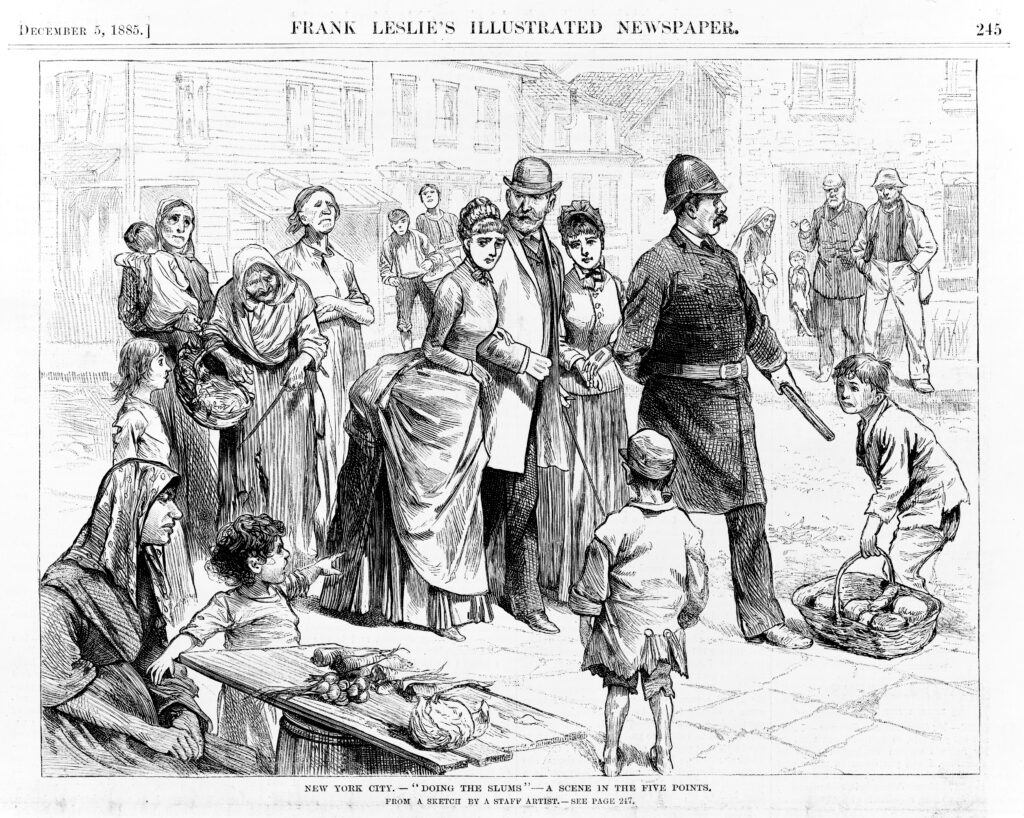
Lower Manhattan in the nineteenth century was crowded, unequal and politically turbulent.
The Five Points neighborhood became one of the city’s best-known immigrant districts. It was home to poor Black and white New Yorkers, recent immigrants, saloons, political clubs and street gangs.
Groups such as the Dead Rabbits and Bowery Boys later became symbols of the neighborhood’s conflicts. Films such as Gangs of New York dramatized that world, but the poverty, political rivalry and street violence were real.
The neighborhood was not simply a place of disorder. It was also a place where immigrants built churches, schools, businesses and mutual-aid institutions. Those communities helped create modern New York.
The Draft Riots of 1863
The New York City Draft Riots began in July 1863.
Working-class anger over Civil War conscription grew into several days of widespread violence. Black New Yorkers were among the principal targets. Homes and businesses were attacked, and the Colored Orphan Asylum was burned.
More than 100 people died. Many more were injured.
The riots exposed deep divisions involving race, class, immigration and political power. They remain among the most destructive episodes of civil unrest in American history.
Tammany Hall, Patronage and Reform
Tammany Hall became one of the most powerful political organizations in New York.
It helped immigrants obtain jobs and assistance. It also used patronage, loyalty and corruption to maintain political control.
Over time, professional government institutions replaced many of the informal systems that had once organized city life. Police departments were consolidated. Public services became more structured. Courts became more specialized.
The transformation was incomplete and often troubled. It nevertheless helped turn Lower Manhattan into a center of government and law.
The Courthouse District Around Foley Square
Few places in the United States contain so many important courts within such a small area.
New York County Supreme Court
The courthouse at 60 Centre Street is one of New York’s best-known civic buildings.
Its broad staircase and classical columns have appeared in countless photographs, films and television programs. The court hears major civil matters arising in New York County.
New York County Family Court
New York County Family Court is located at 60 Lafayette Street.
Its cases are usually less visible to the public than the major commercial cases heard nearby. They are no less important to the people involved.
Every day, judges and court personnel address disputes involving children, parents, safety, financial support and family relationships.
Federal Courts
The Thurgood Marshall United States Courthouse at 40 Foley Square is home to the United States Court of Appeals for the Second Circuit and federal trial courtrooms.
The United States Court of International Trade is located nearby at One Federal Plaza.
Together, these buildings create an unusually concentrated legal district. State, federal, family, criminal and administrative matters may all be heard within a short walk.
How New York Family Court Developed
New York did not always have a single statewide Family Court.
Early children’s court parts developed during the first years of the twentieth century. They reflected a growing belief that children should not always be treated in the same manner as adult criminal defendants.
New York City later established a Domestic Relations Court. That court combined important areas of jurisdiction involving children and families.
The modern New York State Family Court was established in 1962. It brought several categories of family-related cases into a specialized statewide court.
The basic idea remains important.
Family disputes are not ordinary commercial disputes. A Family Court order may govern a relationship for years. It may affect a child’s home, education, safety and contact with a parent.
Family Court therefore combines formal legal rules with intensely human facts.
What Is Court Life Like at 60 Lafayette Street?
Family Court can be unpredictable.
A case scheduled for a short conference may require a lengthy appearance. A hearing may be delayed because another emergency matter takes priority. Negotiations may occur in hallways or conference rooms before the case is called.
Clients should arrive prepared.
Important documents should be organized. Dates and events should be written down. Electronic messages, photographs, school records and medical records should not be presented as an unsorted collection.
Good preparation helps the lawyer identify what matters and what does not.
Family Court judges hear many cases. A clear presentation is usually more effective than a long presentation.
September 11, 2001: Lower Manhattan Changes
The attacks of September 11 changed Lower Manhattan permanently.
Transportation stopped. Access to the area was restricted. Courts and government offices were disrupted.
The court system resumed operations, but the physical environment had changed. Security became more visible. Access to courthouses became more controlled. Barriers and screening procedures became part of daily court life.
The effects were both practical and psychological. Lower Manhattan was still a legal center, but it was now a legal center operating under a new understanding of vulnerability.
COVID-19 and the Rise of Virtual Court
The COVID-19 pandemic created a different kind of crisis.
Family Court had long depended heavily on in-person appearances and paper procedures. Crowded waiting areas and busy courtrooms were normal.
That model became impossible in March 2020.
Virtual operations for New York City Family Court began on March 26, 2020. The system initially concentrated on essential and emergency matters. It then expanded its use of remote conferences and hearings.
The transition was not simple.
Remote proceedings reduced travel and waiting time for some participants. They also created problems for people without reliable technology, private space or stable internet service.
The pandemic did not make Family Court completely paperless or completely virtual. It did force a rapid modernization that would otherwise have taken much longer.
Manhattan Old and New
Manhattan constantly rebuilds itself.
The streets surrounding the courts contain traces of many different cities. The immigrant neighborhoods of the nineteenth century gave way to government buildings, office towers, schools and apartment buildings.
City Hall Park, the Brooklyn Bridge and the courthouses around Foley Square connect present-day Manhattan to its civic past.
The contrast is striking.
A person may leave a modern virtual conference, walk past a courthouse built nearly a century ago and continue through streets shaped by events that occurred generations earlier.
That mixture of old institutions and new problems is part of Manhattan’s identity.
Why Manhattan Family Court Matters
Family Court deals with private problems through a public institution.
The people who enter the courthouse may be dealing with the end of a relationship, loss of contact with a child, domestic violence, unpaid support or government intervention in the family.
The legal issues can be complicated. The emotional issues are often harder.
Effective representation requires more than knowledge of statutes and cases. It requires preparation, judgment and the ability to separate provable facts from anger and accusation.
The court itself has changed over time. The central task has not.
It must make difficult decisions about families using incomplete evidence, limited time and legal standards that must be applied to individual lives.
Frequently Asked Questions About Manhattan Family Court
What is Manhattan Family Court?
Manhattan Family Court is the common name for New York County Family Court at 60 Lafayette Street.
It hears cases involving children and families, including custody, visitation, support, paternity, family offenses, guardianship, neglect and juvenile delinquency.
Is Family Court the same as divorce court?
No.
New York Family Court does not grant divorces. Divorce actions are filed in New York State Supreme Court.
Family Court may still decide custody, visitation, child support, paternity and family-offense matters involving unmarried or separated parents.
What is the difference between a family lawyer and a Family Court lawyer?
“Family lawyer” is a broad term. It may include divorce, separation agreements, property distribution and other matrimonial matters.
A Family Court lawyer concentrates on proceedings heard in Family Court, such as custody, visitation, child support, paternity and orders of protection.
Many attorneys handle both categories. Clients should determine whether the lawyer has substantial experience in the particular court where the case will be heard.
How much does Paul W. Matthews charge?
Paul W. Matthews charges $300 per hour.
The retainer depends on the type and expected complexity of the case. Free telephone consultations are available.
Does Paul W. Matthews handle custody and child-support cases?
Yes.
He represents clients in custody, visitation, child-support, modification, enforcement and related Manhattan Family Court proceedings.
Does he handle orders of protection?
Yes.
He represents petitioners and respondents in appropriate family-offense and order-of-protection proceedings.
Does he handle Family Court appeals?
Yes.
Paul W. Matthews is both a trial and appellate lawyer. He handles selected appeals from New York Family Court orders.
Where can clients meet with him in Manhattan?
Meetings are available by appointment at:
Paul W. Matthews, Esq.
90 Broad Street, 3rd Floor
New York, NY 10004
This is a meeting location. Manhattan Family Court itself is located at 60 Lafayette Street.
About Paul W. Matthews, Esq.
Paul W. Matthews is a New York City family-law trial and appellate attorney with more than 30 years of experience.
He began his career as an Assistant Corporation Counsel trying juvenile-delinquency cases in Manhattan Family Court. He later developed a private practice concentrated in custody, visitation, child support, family offenses, neglect and related Family Court matters.
He has handled nearly 1,000 Family Court cases, including hundreds of trials and numerous appeals.
His approach is practical. He prepares cases carefully, explains the available choices and attempts to avoid unnecessary legal work and expense.
Paul W. Matthews, Esq.
Attorney at Law
90 Broad Street, 3rd Floor
New York, NY 10004
Phone: (347) 461-0760
© 2025 Paul W. Matthews, Esq. | Affordable-Uncontested-Divorce.com